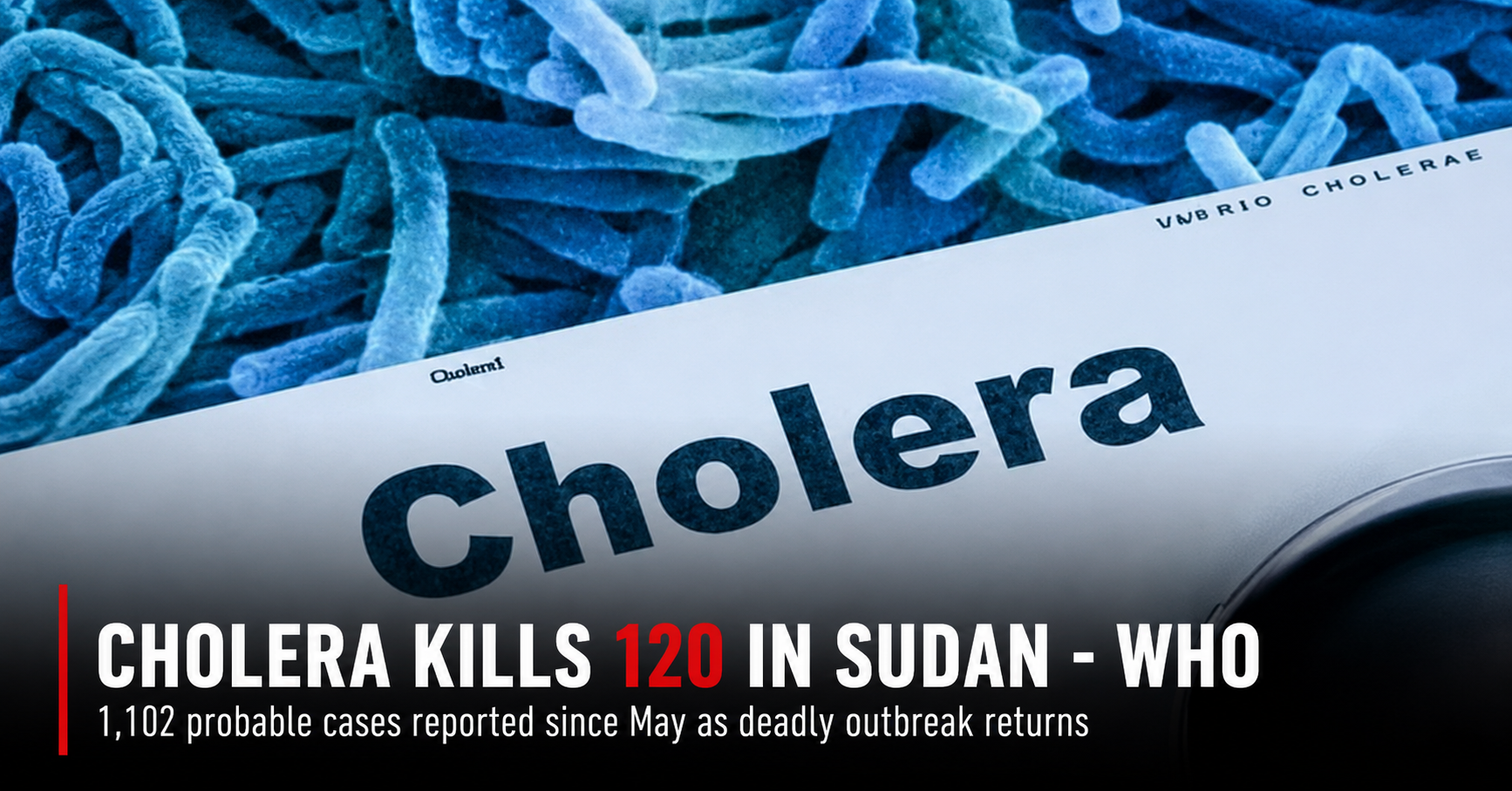
The World Health Organization reported on Wednesday that a cholera outbreak in Sudan has killed 120 people and that there have been 1,102 probable cases since May in remote conflict areas.
Sudan’s healthcare sector has been severely damaged by the more than three-year conflict between the army and the paramilitary Rapid Support Forces (RSF).
This cholera outbreak, which started just two months after the previous one was deemed to be resolved in March, is Sudan’s third in as many years.
According to government statistics, the latest wave killed 3,500 people and infected over 124,400 between July 2024 and March 2026.






The WHO’s Sudan leader, Dr. Shible Sahbani, told reporters that cholera, which is endemic to the country in northeastern Africa, used to strike “in a cyclic manner every three years.”
However, he stated that the nation is currently dealing with almost constant outbreaks “due to the conflict, constraints in access and limited supplies.”
In the upcoming weeks, Sudan’s rainy season is expected to intensify, increasing the number of cholera cases as millions of people lack access to safe water due to the rains.
The latest outbreak was reported by the Sudanese government this week in West Kordofan state, a flashpoint that separates the army and paramilitary zones of authority.
Hundreds of thousands of people are on the verge of hunger as a result of the ongoing, lethal drone attacks carried out by both sides, which have increased the risk of commercial and relief access to the Kordofan region.
Following reports of nearly 300 suspected cases and three fatalities in neighboring North Kordofan, where the UN has warned the RSF is getting ready to launch a lethal ground assault on the state capital El-Obeid, the WHO stated that the outbreak looks to be expanding.
Drone attacks on the city’s power plants are already “disrupting access to electricity and lifesaving drinking water.” On Tuesday, UN humanitarian chief Tom Fletcher issued a warning about the possibility of mass atrocities.
Nearly all of the nation’s hospitals have been forced to close completely or partially after three years of the conflict, which relief organizations believe may have killed over 200,000 people.
According to Sahbani, “forty percent of health facilities are completely non-functional, and the remaining nearly sixty percent are only partially functioning, meaning they are providing only a few services or not enough to patients in the area.”