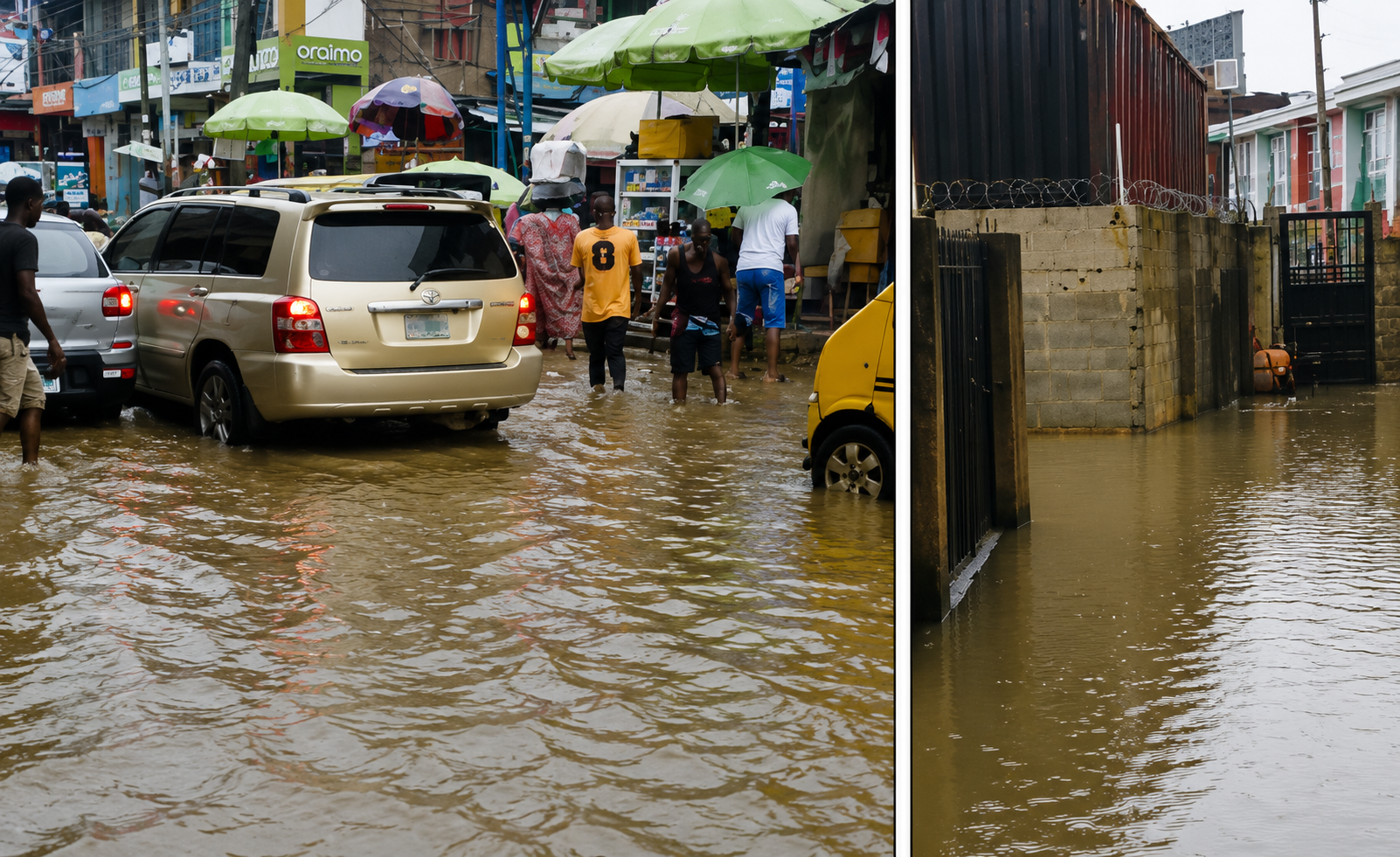
Following hours of intense rains, floodwaters flooded through many towns in Lagos State on Tuesday, burying homes and roads, interfering with traffic, and cutting off electricity in several areas of the state after vital transmission systems were impacted.
Videos that PUNCH Metro was able to collect showed people of FESTAC, Gbagada, Evans, Olushi, Anikantamo, and Adeniji Adele on Lagos Island wading through flooded roadways and drivers straining to maneuver through submerged streets.
Reporters keeping an eye on the situation in Ikeja saw that flooding had infiltrated a number of residences and businesses, prompting some locals to temporarily relocate due to concerns about the situation getting worse.
Many roads were knee-deep in water as a result of the floods, which was made worse by clogged sewers full of plastic debris and poor drainage systems.





Abidemi Raji, an Ikeja resident, attributed the flooding on obstructed drainage systems and poor road design.
The flooding is caused in part by the way the road was built. Due to the volume of water, it typically takes 30 to 60 minutes after the rain stops before the water recedes, even if there is a drainage channel, he said.
Raji claimed that the construction of a hotel had blocked a drainage pipe connecting the area to another street.
“The back passage was blocked after the hotel was constructed, but there should have been a channel connecting this compound to the next street.” The flooding has gotten worse as a result,” he continued.
In the Festac neighborhood of Amuwo-Odofin Local Government Area, the rain also flooded a number of streets, impeding traffic and trapping locals and drivers.
In a video posted by Lagos Reporters on X, flooding covered interior streets and major roads, making it difficult for cars to travel as pedestrians had to wade through the water.
Okeke Mmesoma, a local, called the floods a persistent problem.
“This location floods if it rains a lot. The water normally starts to clear when the rain stops. On my way to work this morning, my shoes became wet,” she remarked.
She noted that commuters stayed away to avoid getting wet, and many drivers avoided the flooded roads to keep their cars from breaking down.
Roads around Adeniji Adele, Evans, Olushi, and Anikantamo on Lagos Island were flooded, while flooding was also recorded in Ajah.
Due to flooding damaging equipment at the Oworo 132/33kV Transmission Station, the excessive rainfall also resulted in power disruptions.
Two power transformers and multiple 33kV feeders were impacted by the station’s extreme flooding, according to a public warning released by Ikeja Electric on Tuesday.
The affected feeders include Oworo Injection Substations 1 and 2, serving Ladilak, Bariga, Araromi, Oworo, Pedro, GTB, Alapere, Agboyi, Araba, Hospital and Gbagada.
As soon as the damaged facilities were put back into service, the energy distribution firm stated it was collaborating with the Nigerian Transmission firm to restore supply.
Residents of Gloryland Estate in Ibafo in neighboring Ogun State were also impacted by the water, and they urged the state government to act quickly.
Residents reported that during the rainy season, some families were forced to temporarily leave their houses due to the flooding, which also damaged buildings and interfered with movement.
Oladipupo Awoyemi, a Community Development Association member, attributed the flooding to clogged drainage systems connected to the Lagos-Ibadan Expressway.
“The entire community floods whenever it rains nonstop for two or three days.” He stated, “We have repeatedly reported the blocked drainage channels, but the issue is still unresolved.”
Waterways have been further blocked by careless building and waste disposal, according to Awoyemi.
Because water flowed freely years ago, the floods was not as bad. Buildings and factories have clogged numerous canals today, and the issue has gotten worse due to trash being dumped into the sewers, he said.
He claims that the yearly floods has harmed structures, interfered with business operations, and put locals’ health at danger.
Everyone is impacted by it. Every time the flooding gets serious, people are unable to use the roads freely, cars are forced to take longer routes, and some residents are forced to abandon their houses,” he continued.
To enhance flood management throughout the state, Lagos State Governor Babajide Sanwo-Olu has authorized the dredging of 28 more principal drainage routes.
This was revealed by Tokunbo Wahab, the Commissioner for the Environment and Water Resources, in a statement released on Tuesday by Kunle Adeshina, the ministry’s spokesperson.
Wahab described Tuesday’s rainstorm as an exceptional weather phenomenon that overwhelmed drainage systems, leading in minor flooding in Victoria Island, Lekki, Ikeja, Gbagada, Mushin, Mafoluku and numerous other localities.
He clarified that temporary flooding is unavoidable following particularly heavy rainfall since Lagos’ distinct coastal environment, with its network of lagoons, rivers, and tidal water bodies, inherently delays the discharge of stormwater into the sea during high tide.
While emergency response teams were on the ground to assist impacted communities, the commissioner reassured locals that the government was keeping a careful eye on drainage systems and flood-prone areas.
Additionally, he warned locals not to build on drainage alignments, stop illegally reclaiming wetlands, or dump trash into drainage channels because doing so exacerbates flooding.
Wahab asked citizens, especially those in flood-prone areas, to abide by weather advisories and safety standards issued by relevant authorities and warned drivers to avoid driving across flooded roads during periods of heavy rains.