The Extraordinary Women Advancing Healthcare (EWAH) Awards in 2026 have rekindled calls for more gender parity in healthcare leadership, with stakeholders bemoaning the fact that despite making up over two-thirds of the global health workforce, women are still glaringly underrepresented in leadership and decision-making roles.
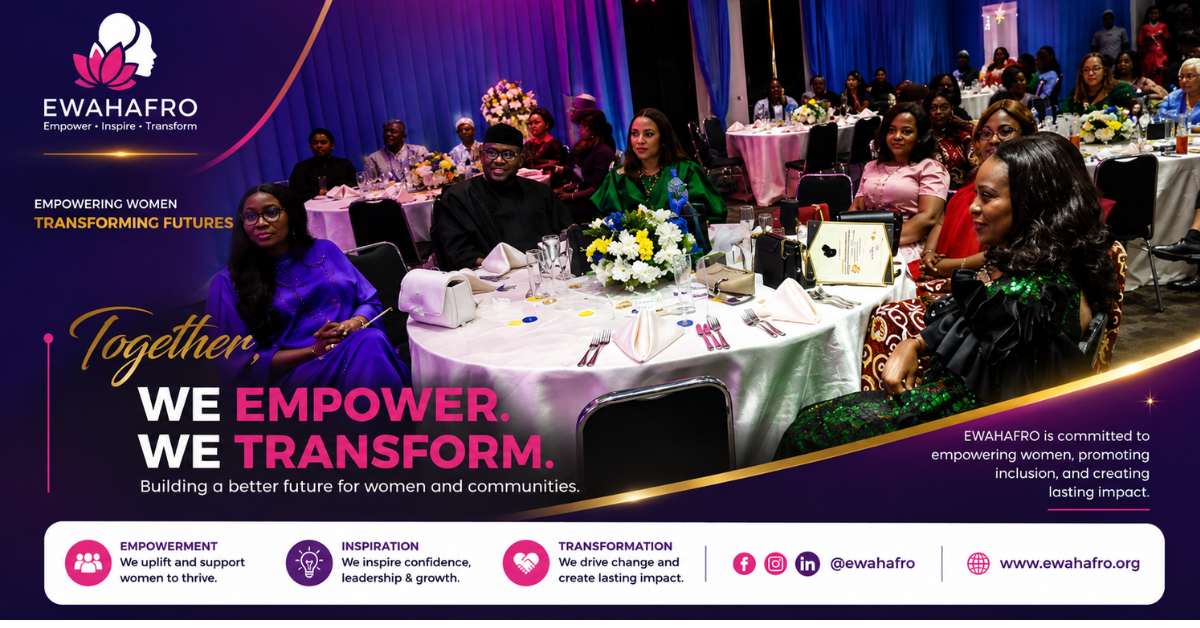
The third edition, which took place in Lagos, gathered together legislators, medical experts, regulators, development partners, and business executives to honor women who are revolutionizing healthcare throughout Africa.
The event, which was organized by the LiveWell Initiative (LWI) and the Sustainability Center of the Global Public Health University (GPHU) in association with Innovara Inc., USA, and the EWAH Nigeria Board, also reaffirmed demands for more women to hold leadership positions in the healthcare industry.
Dr. Bisi Bright, the Regional Representative of EWAH Africa, gave the introductory remarks. She stated that the initiative was created to highlight the ongoing leadership gap in the healthcare industry as well as to honor outstanding women who have made quantifiable contributions to the field.



Despite being the backbone of healthcare delivery, she claims that although women make up over 67.7% of the worldwide healthcare workforce, they only hold a small percentage of leadership positions.
She explained that EWAH recognizes women with what it refers to as a “miles-to-go mindset” leaders whose acknowledgment heralds the beginning of even greater service and impact—and characterized the discrepancy as a systemic obstacle requiring intentional intervention.
In order to guarantee transparency and credibility, she clarified that the selection process is based on a four-layer assessment approach that includes public opinion, stakeholder review, international benchmarking, and ultimate board adjudication. In order to protect the integrity of the awards, she claims that politically exposed individuals and highly competent nominees are also subject to extra scrutiny.
Clare Omatseye, Chairman of the EWAH Advisory Board, characterized the awards as a developing continental movement dedicated to enhancing healthcare systems via inclusive leadership in her welcome speech.
Because every policy and investment eventually impacts patients and communities, she emphasized that healthcare leadership must continue to be people-centered.
Omatseye said that keeping women out of decision-making harms health systems and urged greater cooperation between men and women in leadership.
On behalf of EWAH Matron and Chairman of May & Baker Nigeria Plc, Senator Daisy Ehanire Danjuma, and EWAH Patron Stanley Evans, goodwill messages were delivered. They both praised the organizers for maintaining a platform that acknowledges women’s contributions to bolstering healthcare systems.
Participants were also addressed by Prof. Barri M. Blauvelt, Global Matron and Founder Emeritus of EWAH, founder and CEO of Innovara Inc., USA, who emphasized the significance of ongoing investment in women-led healthcare leadership.
Pharm. Patrick Ajah, the Managing Director of May & Baker Nigeria Plc, spoke on behalf of the event’s Chairman, Senator Danjuma, and stated that women are essential to national progress, institutional expansion, and leadership excellence. He claimed that Senator Danjuma is still a shining example of corporate governance, disciplined service, and visionary leadership.
Outstanding women in the fields of healthcare leadership, innovation, regulation, media, charity, and community health systems strengthening were honored with these honors.
Dr. Elizabeth Jack-Rich, the founder of Elin Group Limited, was one of the honorees; she was recognized by the Elizabeth Jack-Rich Aid Foundation (EJRIAF) for her contributions to healthcare, education, and humanitarian efforts.
NAFDAC Director-General Prof. Mojisola Adeyeye was honored for bolstering pharmaceutical regulation and medicine safety in Nigeria, while Dr. Pamela Jackson-Ajayi, Founder of Pathcare/SYNLAB Nigeria and Chairman of The Bridge Clinic, was recognized for advancing diagnostic and fertility care.
While Pharm, Dr. Njide Ndili received recognition for his contributions to universal health coverage, digital health, and healthcare financing. Abimbola Adebakin received recognition for using technology to enhance pharmaceutical delivery and access to medications.
Osayi Alile for philanthropy and public health initiatives, Adenike Fasawe for creative grassroots immunization programs in Ondo State, Angela Emuwa for media advocacy and increasing healthcare access to underserved communities, Dr. Oluwatomi Kogo for lifestyle medicine and preventive healthcare, and Vivianne Ihekweazu for promoting public health security, health communication, and maternal-child health advocacy were among the other recipients.
Dr. Amina Baloni-Mohammed thanked the organizers on behalf of the prize recipients, characterizing the recognition as an honor and a renewed commitment to improving healthcare throughout Africa.
Speaking as well, Dr. Njide Ndili emphasized that genuine progress in healthcare is fueled by teamwork rather than individual achievement and dedicated the recognition to the teams responsible for the accomplishments.