http://Preeclampsia Awareness: Early Intervention Critical to Safe MotherhoodHealth experts have identified preeclampsia and eclampsia as the leading causes of maternal deaths, overtaking primary postpartum haemorrhage, which had traditionally been the highest contributor to maternal mortality.
The revelation emerged from the recent Maternal and Perinatal Death Surveillance and Response (MPDSR) review conducted in the state, underscoring the need for early diagnosis, prompt treatment and improved referral systems to reduce preventable maternal deaths.
According to the World Health Organization (WHO), maternal death is defined as the death of a woman while pregnant or within 42 days of the termination of pregnancy, irrespective of the duration or location of the pregnancy, from causes related to or aggravated by the pregnancy or its management, excluding accidental or incidental causes.
Maternal mortality is commonly measured using the Maternal Mortality Ratio (MMR), which represents the number of maternal deaths per 100,000 live births within a specified period. Another indicator, the Maternal Mortality Rate, measures the number of maternal deaths per 100,000 women of reproductive age (15–49 years) during the same period.




Traditionally, the major causes of maternal mortality have included primary postpartum haemorrhage (25 per cent), sepsis (15 per cent), abortion-related complications (13 per cent), preeclampsia and eclampsia (12 per cent), obstructed labour (8 per cent), and other pregnancy-related complications.
However, findings from the latest MPDSR review in Ondo State indicate that preeclampsia and eclampsia have now become the leading causes of maternal deaths, highlighting the growing burden of hypertensive disorders during pregnancy.
Health experts noted that, globally, a woman dies from pregnancy-related complications approximately every minute, emphasizing the urgent need for strengthened maternal healthcare services and timely interventions.
They also pointed to the shortage of healthcare professionals as a major challenge. Nigeria has an estimated 28 doctors and 170 nurses per 100,000 population, figures that remain inadequate to meet the country’s healthcare needs when compared with several other nations.
The experts explained that hypertension in pregnancy is diagnosed when a pregnant woman records a blood pressure of 140/90 mmHg or higher on two separate occasions at least six hours apart. Significant proteinuria, another key diagnostic feature, is defined as protein levels of at least one gram per litre of urine or a reading of 3+ on urine dipstick testing.
Preeclampsia is described as the development of hypertension after 20 weeks of pregnancy accompanied by significant proteinuria.
While preeclampsia was previously classified into mild, moderate, severe and imminent eclampsia, current clinical practice categorises the condition into mild preeclampsia, defined as blood pressure between 140/90 mmHg and 159/109 mmHg with significant proteinuria, and severe preeclampsia, characterised by blood pressure of 160/110 mmHg or higher with significant proteinuria.
Other warning signs of severe preeclampsia include persistent severe headache, blurred vision or other visual disturbances, chest pain, liver tenderness, reduced urine output, pulmonary oedema, hyperreflexia or clonus, and HELLP syndrome, a life-threatening complication involving haemolysis, elevated liver enzymes and low platelet count.
Health professionals identified magnesium sulphate (MgSO₄) as the cornerstone of treatment for preeclampsia and eclampsia, citing evidence from the Collaborative Eclampsia Trial (1995) and the MAGPIE Trial (2002–2003), which demonstrated that the drug is significantly more effective than diazepam, phenytoin and placebo in preventing and controlling eclamptic seizures.
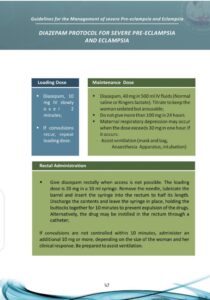
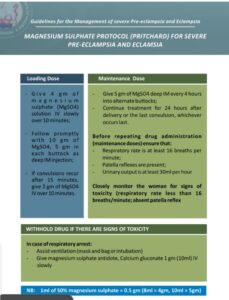
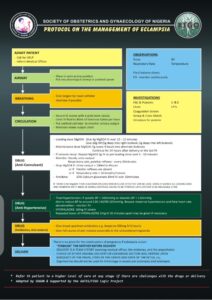
To reduce maternal deaths, the experts recommended that urinalysis be routinely performed at the point of care for every pregnant woman, as it remains essential for the early diagnosis of preeclampsia.
They also urged all secondary healthcare facilities in Ondo State to be equipped to provide the initial emergency management of eclampsia, including the administration of the loading dose of magnesium sulphate before referring patients to higher-level facilities.
The experts further advocated a multidisciplinary approach involving obstetricians, physicians, nurses, pharmacists and other healthcare professionals in the management of preeclampsia and eclampsia.
They stressed the importance of sharing successful clinical practices and experiences among healthcare facilities across the state to strengthen maternal care, improve patient outcomes and ultimately reduce preventable maternal deaths.