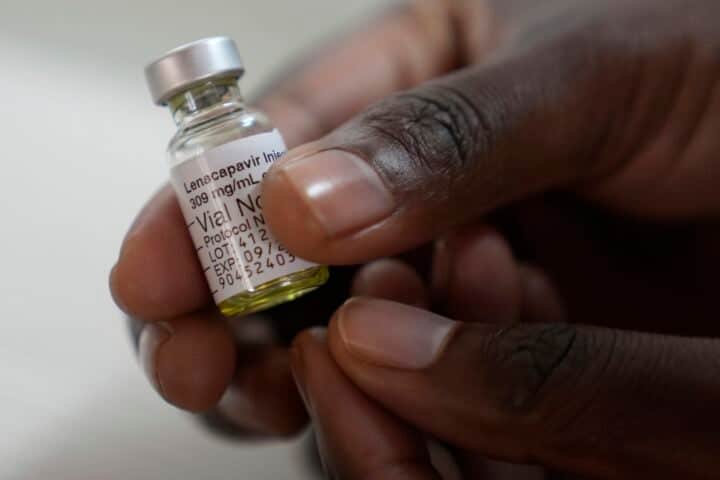
Barely a month to the end of 2025, the Vaccine Network for Disease Control (VNDC) has raised concerns over the Federal Government’s delay in releasing funds for immunisation, warning that the hold-up could lead to vaccine shortages and undermine progress in child health coverage.
According to The Guardian, the Chief Executive Officer of VNDC, Chika Offor, disclosed that despite a N231 billion budgetary allocation for immunisation in 2025, no funds have been released so far, while only 25 per cent of the 2024 allocation has been disbursed.
Speaking at the Pre-Summit on the Sixth Legislative Summit on Health and the Legislative Roundtable on Climate, Environment, and Sustainable Health — organised by the World Health Organisation (WHO), the Federal Ministry of Health and Social Welfare (FMOH), and the Nigerian Environmental Summit Group (NESUG) — Offor lamented that routine immunisation, which she described as a “global public good,” was being neglected.
She emphasised the importance of immunisation in protecting Nigerian children, noting that the national target is to reach 106 million children. “So far, only 36 million children have been reached. If funds are not released soon, the country will face severe vaccine shortages,” she warned.
Offor urged the Federal Government to release funds for vaccine procurement without delay and called for predictable, legally protected financing mechanisms that make health funding untouchable once appropriated.
She also proposed that immunisation and other essential health commodities be placed under first-line charge, similar to the Basic Healthcare Provision Fund (BHCPF), which currently receives one per cent of consolidated revenue.
“We can push for an additional 1 per cent to make it 2 per cent, dedicated to vaccine and health commodities,” she said. “But vaccine programmes cannot work in isolation. If immunisation funds are not released to procure vaccines, we have failed.”
Offor highlighted that fenced, legally protected health funding would guarantee transparency, timeliness, and sustainability in Nigeria’s immunisation programme.
In his keynote address, the WHO Representative in Nigeria, Dr Pavel Ursu, stressed the need for climate-resilient health systems and sustainable financing mechanisms to achieve Universal Health Coverage (UHC).
According to Ursu, climate change has already emerged as a public health crisis, intensifying floods, heatwaves, and disease outbreaks that threaten Nigeria’s healthcare infrastructure and progress toward health equity.
“The fingerprints of climate change are everywhere from cholera and meningitis to malaria, respiratory illnesses, and malnutrition,” he said.
He cited findings from the 2024 National Climate Health Vulnerability and Adaptation Assessment, jointly conducted by WHO, FMOH, and the UK’s Foreign, Commonwealth and Development Office (FCDO), which indicated that up to 21 per cent of Nigeria’s total disease burden could be linked to climate change if urgent adaptation measures are not implemented.
Represented by the WHO Deputy Country Representative, Dr Alexander Chimbaru, Ursu reaffirmed the organisation’s commitment to supporting Nigeria in building climate-smart, energy-resilient, and sustainably financed health systems anchored on legislative accountability.
He also noted that at COP28, health was placed at the forefront of global climate discussions for the first time, with Nigeria joining over 120 countries in committing to integrate health resilience into national climate policies.
Ursu called for legislative frameworks to ensure that new health facilities are green and energy-efficient, while state budgets prioritise climate-resilient infrastructure.
He further urged the creation of dedicated funds for climate-health research, innovation, and local adaptation, proposing climate-health trust funds, green bonds, and public-private partnerships (PPPs) to mobilise additional resources beyond traditional health budgets.
“The health sector cannot work in isolation,” Ursu added. “We must collaborate across energy, environment, and finance ministries, while empowering states and local governments to implement adaptation strategies grounded in science and community needs.”