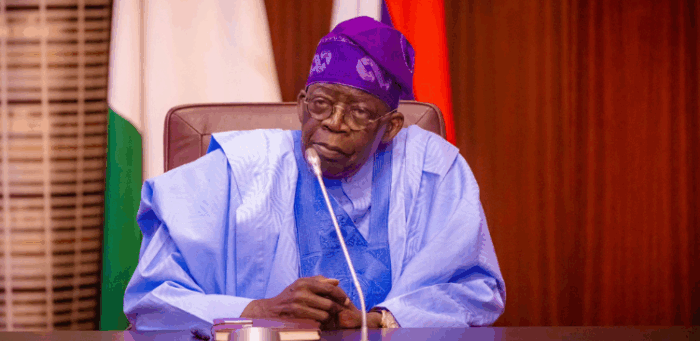
President Bola Tinubu has ordered that the ongoing strike by the National Association of Resident Doctors (NARD) be resolved without delay.
This directive was disclosed by the Minister of State for Health and Social Welfare, Dr Adekunle Salako, during a media briefing in Abuja on Monday. He said the President has instructed the Ministry to deploy every legitimate measure to restore full medical services across the country.
According to Salako, most of NARD’s 19-point demands are already being handled through negotiations, new recruitment efforts, and several financial interventions.
However, NARD dismissed the government’s claims, insisting that the issues remain largely unresolved.
While acknowledging the disruption caused by the strike, Salako maintained that talks with the doctors were still in progress. He noted that a Collective Bargaining Agreement system, led by the Minister of Labour, had been running since August to streamline the concerns of different professional groups in the health sector. So far, 12 meetings have been held, with an external industrial relations expert brought in to mediate tricky matters such as remuneration parity, pay relativity, and the proposed consultant cadre for non-medical doctors.
“Healthcare delivery is teamwork, and we must find collective solutions rather than isolated agreements that create further divisions,” he said.
Addressing manpower gaps, Salako revealed that 14,444 health workers were hired in 2024 across 64 federal tertiary institutions. He added that approval had been granted for the recruitment of another 23,059 personnel in 2025, including 2,629 resident doctors and 868 consultants.
He further stated that Tinubu has approved the extension of retirement age for clinical staff to 65 years, and set up a committee—which includes NARD—to finalise a unified framework for the hiring of locum doctors. The committee’s report is expected soon.
On welfare, the Minister confirmed that payments of pending arrears had begun.
“A total of ₦21.3 billion has been released, with about 60 percent of affected workers already paid. Another ₦11.9 billion is being processed, while ₦10 billion was earlier disbursed under the Medical Residency Training Fund to support postgraduate examinations,” he said.
He added that government efforts to address the migration of health workers include expanding training capacity locally, with the possibility of exporting skilled professionals. According to him, “Nigeria is working toward transforming its health professionals into assets that contribute to both national service and foreign exchange earnings”.
Salako also outlined a new recruitment system that allows yearly intake of permanent staff, while empowering chief medical directors to hire temporary workers as needed. A ministerial task force, he added, will be monitoring tertiary hospitals to ensure staff on duty remain efficient throughout the strike.
During the briefing, Minister of Health, Dr Tunji Alausa, clarified that ₦41 billion was owed under the 25%/35% CONMESS adjustment and that ₦31 billion—about 83 per cent of the total—had already been paid or was being processed. He also debunked claims suggesting doctors’ qualifications had been downgraded.
A representative of the Medical and Dental Council of Nigeria explained that the Council merely carried out a classification exercise to group additional qualifications such as fellowships and memberships into categories A to D, based on awarding institutions and specialty relevance. Doctors who felt misclassified were advised to resubmit their certificates. New institutions were also encouraged to formally notify the Council for recognition.
Despite the strike, Salako said consultants in federal tertiary hospitals were doing their best to keep essential services running. Outpatient units and emergency wards remain open, though at reduced levels, while urgent surgeries and critical treatments continue nationwide. He appealed to Nigerians for patience, stressing that a task force is monitoring compliance among workers who are not part of the strike.
In its own statement on Monday, signed by President Dr Mohammad Suleiman, Secretary-General Dr Shuaibu Ibrahim, and Publicity Secretary Dr Abdulmajeed Yahya, NARD insisted that none of its 19 demands had been fully met.
The association argued that only a limited portion of the government’s disbursed funds reached resident doctors.
“Our demands represent the minimum requirements for a functional healthcare system and the restoration of dignity to medical practice in Nigeria,” the group stated.
It stressed that the industrial action goes beyond arrears, noting that harsh working conditions, burnout, and poor facilities were driving doctors out of the country.
“Nigerian doctors are collapsing from exhaustion in hazardous environments without recognition or compensation. The ongoing migration of doctors is driven by hardship, not greed,” NARD said.
While expressing readiness for dialogue, the association maintained that “industrial peace cannot be achieved through press statements but through justice, sincerity, and respect for agreements.”
It urged Nigerians to understand the strike as a fight for the survival of both medical personnel and patients—not a confrontation against the public.