Ede Moses
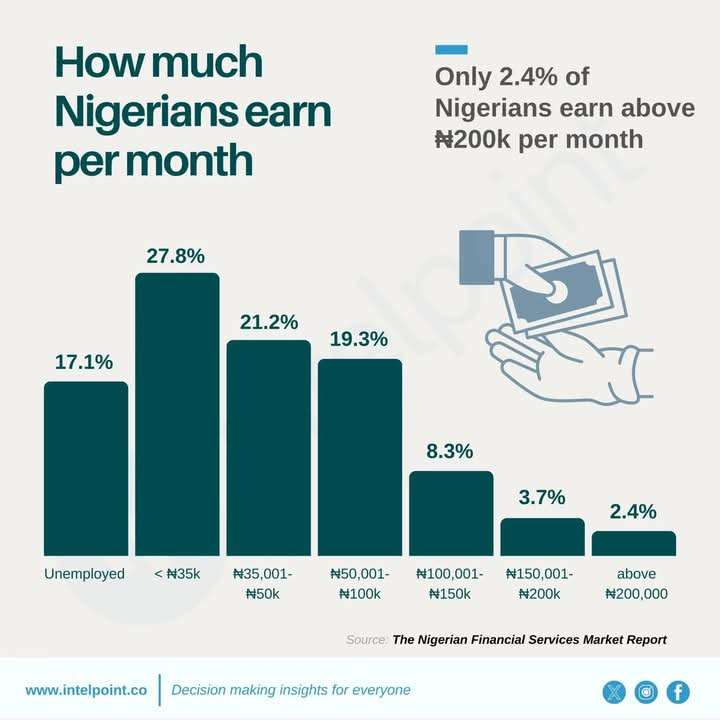
There is no gainsaying in the fact that Nigeria is grappling with harsh economic reality. This has serious effects on every household . Average Nigerian cannot afford a decent life.
. Below is an analysis of the issues and potential solutions based on the latest data and trends.
Key Problems in Nigeria’s Economy
1. Low Earnings and Weak Consumption
– Nigeria’s GDP per capita is just $806 (nominal) and $6,790 (PPP) as of Q1 2025, far below global averages .
– The recent minimum wage increase from ₦30,000 to ₦70,000 (a 134% hike) was meant to improve living standards, but inflation (24.48% as of January 2025) has eroded much of its impact .
– 79% of Nigerians cannot afford a healthy diet, meaning consumption is constrained even for basic necessities .
2. Inflation and High Production Costs
– Food inflation remains elevated at 26.08%, driven by supply chain disruptions, currency depreciation, and import dependency .
– Businesses face high operational costs due to poor infrastructure, unreliable electricity, and FX volatility, making locally produced goods uncompetitive .
3. Over-Reliance on Oil and Weak Non-Oil Sectors
– Oil accounts for 90% of export earnings but only 9% of GDP, leaving the economy vulnerable to price shocks .
– Agriculture, despite employing 40% of the workforce, suffers from low mechanization (1.5 hp per hectare vs. FAO’s recommendation) and underinvestment .
4. Population Growth Without Economic Growth
– Nigeria’s population is 223.8 million (2023) and projected to exceed 400 million by 2050, but GDP growth (~3.1% in 2024) barely keeps pace .
– Without structural reforms, this demographic boom risks becoming a liability rather than an asset.
Solutions to Boost Consumption and Economic Growth
1. Reduce Production Costs to Boost Supply
– Improve Infrastructure:
– Nigeria’s power shortages and poor transport networks inflate logistics costs. Investments in renewable energy (e.g., the $200 million mini-grid deal with WeLight) could help .
– Lower Import Dependency:
– Nigeria’s agricultural trade deficit (₦689.7 billion in 2019) highlights reliance on food imports. Policies should incentivize local farming and agro-processing .
– FX Stability & Tariff Adjustments:
– The 14% U.S. tariff on Nigerian exports hurts competitiveness, but Nigeria’s growing FX reserves ($23.11B in 2024) could stabilize the naira and reduce import costs .
2. Wage Increases Driven by Business Growth, Not Just Policy
– The minimum wage hike risks job losses if businesses (especially SMEs) can’t absorb higher labor costs .
– Productivity-led wage growth (via mechanization, skills training, and tech adoption) is more sustainable than mandated hikes.
3. Diversify the Economy Beyond Oil
– Expand Agribusiness:
– With 90% of Nigeria’s agricultural output from smallholders, improving access to credit and modern farming techniques could boost yields .
– Leverage Technology & Services:
– Fintech and digital services are growing but need better regulatory support to scale .
4. Tackle Inflation Structurally
– Monetary Policy Adjustments:
– The Central Bank of Nigeria (CBN) paused rate hikes after inflation rebasing, but further FX stability measures are needed .
– Subsidy Reforms & Fiscal Discipline:
– Tinubu’s removal of fuel subsidies was a step toward reducing fiscal burdens, but social safety nets are critical to cushion the poor .
Conclusion: Turning Population into an Asset
Nigeria’s large population is only a liability if the economy remains stagnant. To convert it into a market, the country must:
– Lower production costs (energy, logistics, FX stability).
– Boost real wages via productivity, not just legislation.
– Diversify into agriculture, manufacturing, and tech to reduce oil dependency.
Without these reforms, Nigeria’s demographic dividend will remain untapped, and consumption will stay weak. The solutions exist—but execution is the real challenge.