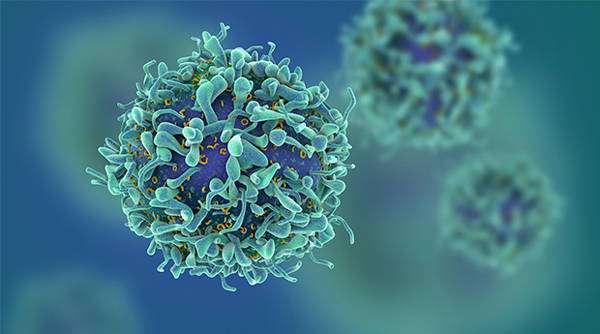
Scientists at Weill Cornell Medicine say they have identified a major reason cancer cells are able to weaken the body’s defences — and a potential way to stop it — marking what could become a big leap forward for immunotherapy.
Their new findings, released in Nature Immunology, show that tumours exploit a signalling pathway that drains the energy of T cells, the immune system’s frontline fighters. Once exhausted, these T cells struggle to mount an effective attack. But the researchers discovered that shutting down this signal can keep T cells active for much longer, sharply improving their anti-tumour response.
Co-senior author Dr. Taha Merghoub described the milestone as a step toward a future where the immune system can be re-energised to defeat cancer. “Our dream is to revive exhausted T cells so the immune system itself can defeat cancer. This discovery brings that future closer. T cell exhaustion is a major obstacle in modern immunotherapy. Even when patients initially respond well, their T cells can eventually burn out, reducing the effectiveness of treatment,” he said.
The spotlight of the research falls on CD47 — a protein often called the “don’t eat me” signal because cancer cells use it to avoid being destroyed. The team made an unexpected observation: T cells themselves also produce CD47, and its levels rise significantly when they begin to tire. Experiments in mice further revealed that animals without CD47 developed tumours more slowly, suggesting that the protein plays a hidden role in suppressing immunity from within.
The tumour environment appears to make things worse. According to the study, cancer cells release a protein known as thrombospondin-1, which binds to CD47 and accelerates T cell exhaustion. “That was the eureka moment. Remove CD47 or thrombospondin-1, and T cells stay strong,” Merghoub said.
To interrupt this harmful interaction, the researchers tested a peptide known as TAX2, designed to block CD47 from linking with thrombospondin-1. Mice treated with the peptide showed slower growth of melanoma and colorectal cancers, while their T cells remained more alert and aggressive. TAX2 also strengthened the impact of PD1 therapy, one of the most widely used immunotherapy treatments today.
Lead author Dr. Chien-Huan Weng said the results confirm that targeting this pathway could become a new therapeutic strategy. He added that researchers are now working to develop safer and more precise ways to apply the discovery in human patients, noting that the approach could eventually serve as a standalone treatment or enhance existing cancer therapies.