A bedbug infection or infestation can be difficult to treat on one’s own and can take weeks to months.
Bed bugs are one of the great travellers of the world and are readily transported via luggage, clothing, bedding and furniture. In many cases, people carry bed bugs from place to place, often without realizing.
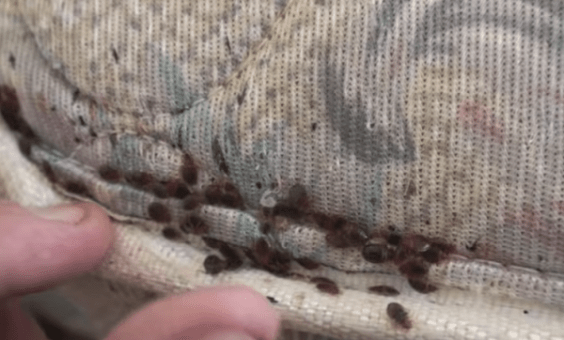
A person may notice itchy welts on their skin if they sleep in a bed with bedbugs. Bedbugs are small, but a person may notice them if they inspect the folds of mattresses and bedding.
Bedbugs do not usually hide on the human body. Instead, they tend to hide in the piping or folds of mattresses, in the creases of bedding, and in the cracks of the bed. They will usually only be on the body when feeding.
To get rid of bed bugs, act at the first signs of infestation and use an integrated pest management approach involving prevention and sanitation.
Bedbugs are often tough to get rid of, so one may need a few different approaches. Once you identify and contain all infested areas, you can combine chemical and non-chemical treatments to kill the bugs.
Here are ways to eliminate bedbugs:
*Seal any small hiding areas. This eliminates hiding places and gets the bugs out into the open.
*Remove infested items. Place them in a sealed plastic bag and treat them.
*Items that cannot be treated should be placed in a sealed plastic bag or storage container and left there for a long time to ensure any active bugs are dead.
*Purchase protective covers that seal mattresses and box springs. With covers that seal, the bed bugs will get trapped inside and die.
*Vacuum after each use. Seal the bag as tightly as possible and immediately throw it out in an outdoor trash container.
*Discard furniture responsibly if you can’t safely eliminate the bed bugs. Destroy it so someone else won’t be tempted to bring it into their home.
*Consider non-chemical methods of killing bed bugs. Some will be more useful than others depending on your situation. These and other methods can be helpful, but they might not get rid of the infestation entirely:
*Heat treatment: You can use a clothes dryer on high heat. You can also use black plastic bags in a hot, closed car in the sun, but success depends on your climate and other factors. Do-it-yourself heat treatments might not work. Professionals have access to more intensive and proven methods that can even treat whole houses with heat. Do not try to kill bed bugs by increasing your indoor temperature with a thermostat, propane space heater, or fireplace – this does not work and is dangerous.
*Cold treatment may work, but can only be successful in the home environment if the freezer is set to 0o F. Many home refrigerator freezers are not cold enough to kill bed bugs. You must leave the items in a sealed bag in the freezer at 0o for three days. Always use a thermometer to check the temperature, since home freezers are not always set to 0o.
Meanwhile, some chemicals or strong insecticides are good options to eliminate bedbugs. However, these can be hazardous if a person uses them indoors.
Mint leaves
Mint leaves are natural repellents to insects and most insects hate the smell of this plant and bed bugs are no exception. You can use mint leaves to prevent bed bugs from entering your homes.
All you need to do is crush some mint leaves into smaller pieces and sprinkle around the sleeping area or inside the cradleboard of small children. You can also put dried mint leaves packet between your linen closets and mattress. The mint leaf will dry up the bed bugs in no time. Repeat this exercise every 3-5 days for best results.
Baking soda
Baking soda also is a wonderful response to the issue of how to get rid of bed bugs. Baking soda works very effectively in killing the bedbugs even before you know it.
It sucks the moisture present on these tiny parasites and this eventually causes their death. You will need half bowl of baking soda and a vacuum.
Put the soda at all the places affected with the bugs and vacuum all the soda after three days. Repeat the process and your home will be free of bed bugs in no time.
You should see your doctor if you have:
Many bites
Blisters
Skin infection (bites feel tender or ooze discharge, such as pus)
An allergic skin reaction (skin red and swollen or hives)