The federal government says it is pushing ahead with plans to wipe out Neglected Tropical Diseases (NTDs) by 2030, aligning its agenda with the World Health Organization’s global roadmap.
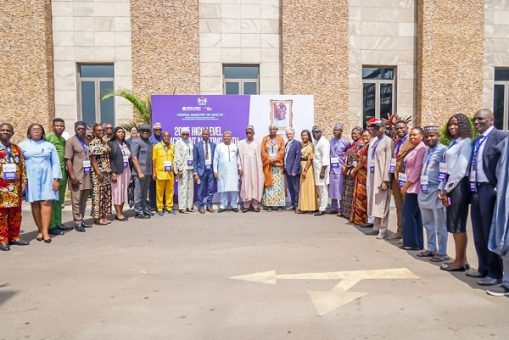
At a high-level advocacy and resource mobilisation meeting in Abuja, the Minister of State for Health and Social Welfare, Dr Adekunle Salako, explained that Nigeria is strengthening domestic funding, improving coordination, and deepening partnerships to accelerate NTD elimination.
With an estimated 166 million Nigerians still needing treatment for at least one NTD, the challenge remains significant. But Salako noted that 3.5 million people across 109 LGAs in 17 states no longer require mass drug administration for specific diseases, a development he linked to stronger collaboration among government agencies, donor partners, civil society groups and institutions including the Uniting to Combat NTDs coalition and the Global Fund.
He said ongoing reforms in the health sector, such as the Nigeria Health Sector Renewal Investment Initiative and the Sector-Wide Approach, will help sustain momentum. Salako added that President Bola Tinubu’s Unlock Healthcare Value Chain initiative is expected to boost access to locally produced medicines and consumables needed for NTD treatment at community level.
The Minister encouraged state governments to secure dedicated budget lines for NTD programmes and integrate them with other health interventions for better efficiency. He also appealed to stakeholders to ramp up public awareness and resource mobilisation.
In her remarks, Permanent Secretary of the Ministry, Kachollom Daju, described the Abuja meeting as an important platform for strengthening leadership and financing at a time when NTDs still affect more than 1.5 billion people worldwide. She cautioned that Nigeria’s progress could stall if domestic resources shrink further or if donor support continues to decline.
Daju called for deeper federal-state cooperation, urging states to eliminate duplication, integrate health programmes, and build stronger systems capable of handling both infectious and non-communicable diseases. She reiterated the Ministry’s commitment to universal health coverage and noted that effective NTD control directly supports poverty reduction and national productivity.
Stuart Halford, Director of Resource Mobilization and Advocacy for Uniting to Combat NTDs, praised Nigeria’s progress but stressed that “sustained funding and accountability are now the critical next steps.”
He said state commissioners have agreed to establish dedicated NTD budget lines, calling it “the bedrock of sustainable progress in eliminating these debilitating diseases.” Halford added that the coalition is helping Nigeria grow domestic and external financing, including support through the World Bank’s IDA as well as bilateral and multilateral channels.
“We are working with the government to develop business cases to strengthen investment and mobilize resources,” he said.
Also speaking, Secretary of the Nigerian Health Commissioners’ Forum, Dr Amina Ahmed El-Imam, reaffirmed states’ commitment to the NTD fight, pointing to ongoing progress in several states, including Kwara. She stressed that visibility and political will must remain strong, noting that “These diseases are certainly not forgotten by the Commissioners’ Forum.”
El-Imam said that as Nigeria gains ground against infectious diseases, the rise of non-communicable conditions such as cancer, diabetes and hypertension demands renewed attention. She added that freeing the system from the weight of NTDs will help channel more resources toward emerging health challenges and advance Nigeria’s broader goal of equitable and sustainable healthcare.