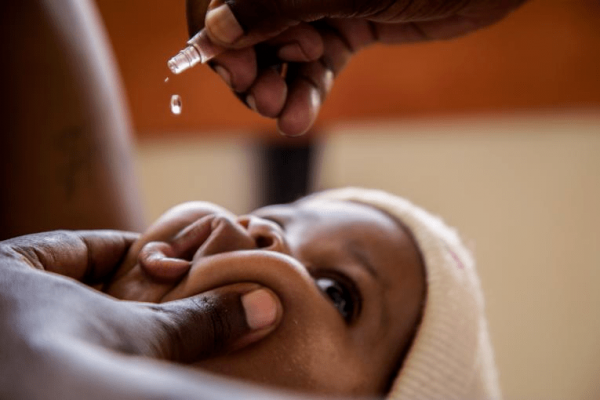
The Federal Government has urged parents, guardians, and caregivers across the country to ensure that every eligible child receives the ongoing integrated Measles-Rubella vaccination, describing it as a crucial step toward protecting Nigerian children from deadly but preventable diseases.
The 10-day nationwide exercise, taking place in 11 states and the Federal Capital Territory (FCT), is designed to boost immunity against measles, rubella, and other vaccine-preventable diseases while integrating additional public health interventions.
Speaking at Wuse Market in Abuja after a 10-kilometre sensitisation walk, the Director of Disease Control and Immunization at the National Primary Health Care Development Agency (NPHCDA), Dr Ahmed Rufai, said the initiative aims to curb child morbidity and mortality associated with preventable diseases.
“This is the mother of all campaigns,” Rufai said. “We are vaccinating children aged nine months to 14 years with different antigens, including the Measles-Rubella vaccine, routine immunization vaccines, and HPV vaccines for girls aged nine.
“We are also collaborating with malaria and neglected tropical disease programmes to provide additional preventive care. We appeal to caregivers, mothers, fathers, and guardians to take their children to the nearest health facility for vaccination.”
He disclosed that the government plans to vaccinate about 106 million Nigerians during the 10-day exercise, stressing that immunisation remains one of the most cost-effective and reliable ways to prevent disease outbreaks.
Representing Civil Society Organisations (CSOs), the Chief Executive Officer of the Vaccine Network for Disease Control (VNDC), Chika Offor, described the Measles-Rubella Integrated Campaign as a “bold and ambitious public health initiative,” noting that more than 100 million children across the country are expected to be reached.
Offor highlighted that vaccines are safe, effective, and free, urging parents to take full advantage of the opportunity.
“With the introduction of new vaccines such as Measles-Rubella, HPV, and others, alongside efforts to control malaria and neglected tropical diseases, the government aims to ensure that every Nigerian child reaches their full potential,” she said.
Also speaking, the Coordinator of the World Health Organization (WHO) Field Office for Integrated Service Delivery in the FCT, Dr Kumshida Yakubu Balami, reaffirmed that development partners are working closely with the NPHCDA to ensure that no eligible child is excluded.
“We have all the antigens in the Nigerian routine immunization schedule to prevent vaccine-preventable diseases,” Balami said. “Our goal is to ensure that every child aged nine months to 14 years is vaccinated against measles and rubella by March 2026. We do not want to see any child within that age group come down with measles, which is entirely preventable.”
She appealed to parents to cooperate with health workers and ensure their children are vaccinated, stressing that collective action today would build a healthier and stronger nation for the future.