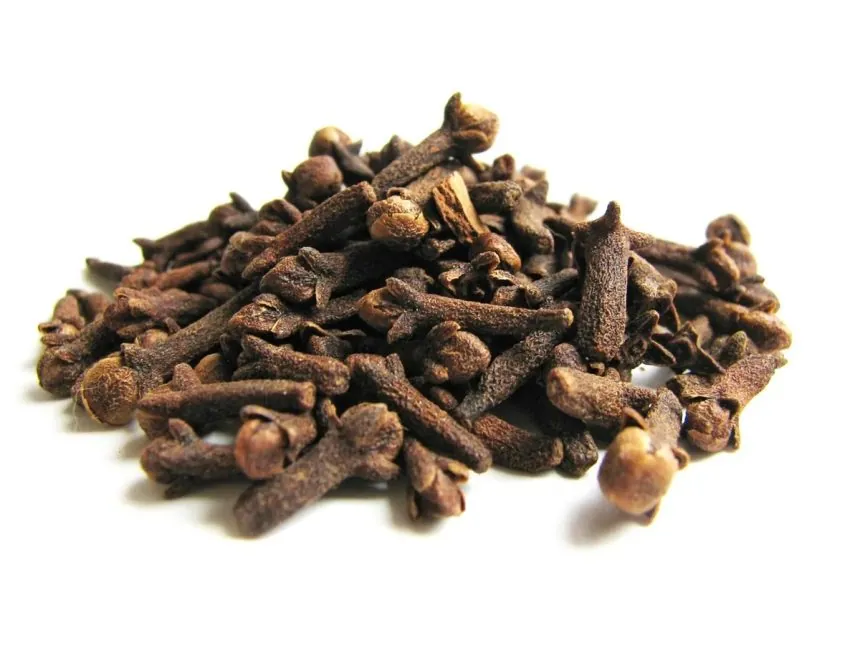
Until now, several herbs, including Spondias mombin, ginger, lime, and guava, have shown benefits for rheumatoid arthritis or osteoarthritis pain. Still, researchers said clove could be another candidate to manage or even minimise uncomfortable symptoms of rheumatoid arthritis.
Studies have found that clove oil has anti-inflammatory and analgesic properties, making it beneficial to alleviate pain and discomfort for those with arthritis.
The integration of clove extract into treatment regimens could enhance the overall efficacy of arthritis management strategies by providing a natural, less harmful option for patients.
In fact, research suggests that the compounds in cloves may have several health benefits, including supporting liver health, temporary toothache relief, protecting against cancer and helping stabilize blood sugar levels.
Eugenol, the main active compound in cloves, is a naturally occurring plant chemical and an antioxidant that works in multiple ways. It blocks certain chemicals and nerve responses that cause pain and that can heighten pain sensitivity during stress.
Cloves are used for arthritis by adding whole or powdered cloves to foods and drinks to harness their anti-inflammatory and antioxidant properties, primarily due to the compound eugenol, which helps reduce inflammation.
Additionally, concentrated clove water can be applied as a warm compress to affected joints, with studies showing a significant reduction in pain levels with consistent application. However, always consult a doctor before starting any new therapy.
There are lots of locally prepared anti-arthritic remedies in varying localities in Nigeria, and a remedy that has been scientifically proven useful is produced from coconut oil and Sida acuta.
Researchers, investigating the chemical composition and potency of the locally prepared anti-arthritis remedy made from coconut oil and Sida acuta leaves, affirm that it is effective in reducing the pains and inflammation observed among arthritic patients.
Commonly called Broom weed, Sida acuta is called aihenmmwin in Edo, udo in Igbo, and isepotu in Yoruba.
The remedy was given to 100 already diagnosed patients with osteoarthritis for topical application/massage. The application was done twice daily for three weeks, and questionnaires were used as a tool to obtain feedback from them.
Sixty-five percent of volunteers reported complete disappearance of inflammations and their associated pains, while 35 percent reported drastic reduction, but slight pains and mild inflammations associated with arthritis still persisted.
The 2022 study that backs up the therapeutic claim of Sida acuta and coconut oil in the management of arthritis in folklore medicine practice appeared in the International Journal of Medical and All Body Health Research.
Previously, researchers had said that coconut oil has the ability to suppress or reduce inflammation due to its unsaturated fatty acid content. Linoleic acid, an unsaturated fatty acid that is richly present in coconut oil, is known to promote relaxation.
However, the researchers declared, “Our locally made preparation showed a high level of efficacy in the management of osteoarthritis and its associated discomfort with promising potential for the development of new drugs in this area.
In 2023, the researchers in the Journal of Pharmacy & Bioresources declared that extract of the Spondias mombin stem bark significantly reduced inflammation in rat paws because of its radical scavenging and anti-inflammatory effects. Its extract made with water had a stronger impact than its alcohol-based extract on its anti-arthritis properties.
Locally called Iyeye (Yorubas) and Uvuru (Igbo) by the native people of Nigeria, Spondias mombin, or Hog plum is used in folkloric medicine for the treatments of urethritis, diarrhoea, and gonorrhoea.
In 2010, a study reported that all parts of Ocimum basilicum (scent leaf), including the seed, can be boiled with mustard oil, and the prepared lotion is applied to joint pain for two to four days.
Other herbs mentioned by researchers as helpful in the treatment of rheumatism include Aframomum melegueta (alligator pepper), Anacardium occidentale (cashew), Alchornea floribunda (Christmas bush or Igi Oba), and the ginger plant.
In one study, 70 patients with rheumatoid arthritis took either 1,500 milligrammes (mg) of ginger powder or a placebo for 12 weeks.
Results of this research published in the journal Arthritis suggested that ginger may improve rheumatoid arthritis symptoms by affecting the expression of certain genes linked with rheumatoid arthritis.
What is more, a study that had 70 women randomly assigned to take either 500 mg of garlic powder tablets twice a day or a placebo for eight weeks reported that those who took the garlic reported significantly lower pain intensity and fatigue scores.
Also, clinical studies cited in the review published in the journal Nutrients found that taking supplements of ginger may help people with osteoarthritis and rheumatoid arthritis have less pain and better function, making it a useful supplementary therapy for these diseases.
In patients with active rheumatoid arthritis, two trials found that taking 750 mg of ginger powder twice a day could reduce the expression of many genes related to inflammation and immune system activation.
The topical administration of 5 per cent ginger gel, which is made from physiological aqua gel, to the knee, likewise produced this analgesic effect, which persisted for three months after two weeks of application.
However, the water gel control group experienced only temporary pain reduction before rapidly returning to their pre-treatment levels. Therefore, using ginger extract topically can help osteoarthritis patients with their knee pain.
Formulations using ginger extract or ginger combined with other anti-inflammatory herbs can therefore offer an alternative treatment to the often-used analgesic gels.
Recent research indicates that ginger works well when paired with other anti-inflammatory plants such as Alpinia galangal (Siamese ginger) or Curcuma longa (turmeric). According to trials, standing knee discomfort in osteoarthritis patients is reduced when ginger and Siamese ginger are taken together.