In the cool mist rising off the highlands of Taraba State’s Sardauna Local Government Council, a determined group of health workers threads its way along narrow, winding mountain paths.
With vaccine carriers strapped to their backs and resolve etched on their faces, they carry not only medicine but a promise that no child, no matter how remote their village, will remain vulnerable to the crippling threat of polio.
For years, reaching Taraba’s most secluded communities seemed like an impossible dream. The rugged terrain and scattered settlements turned vaccination campaigns into logistical nightmares.
But that dream is finally inching closer to reality. In an ambitious push spearheaded by the United Nations Children’s Fund (UNICEF) and local health authorities, the state’s ongoing polio immunisation drive is achieving victories once thought beyond reach.
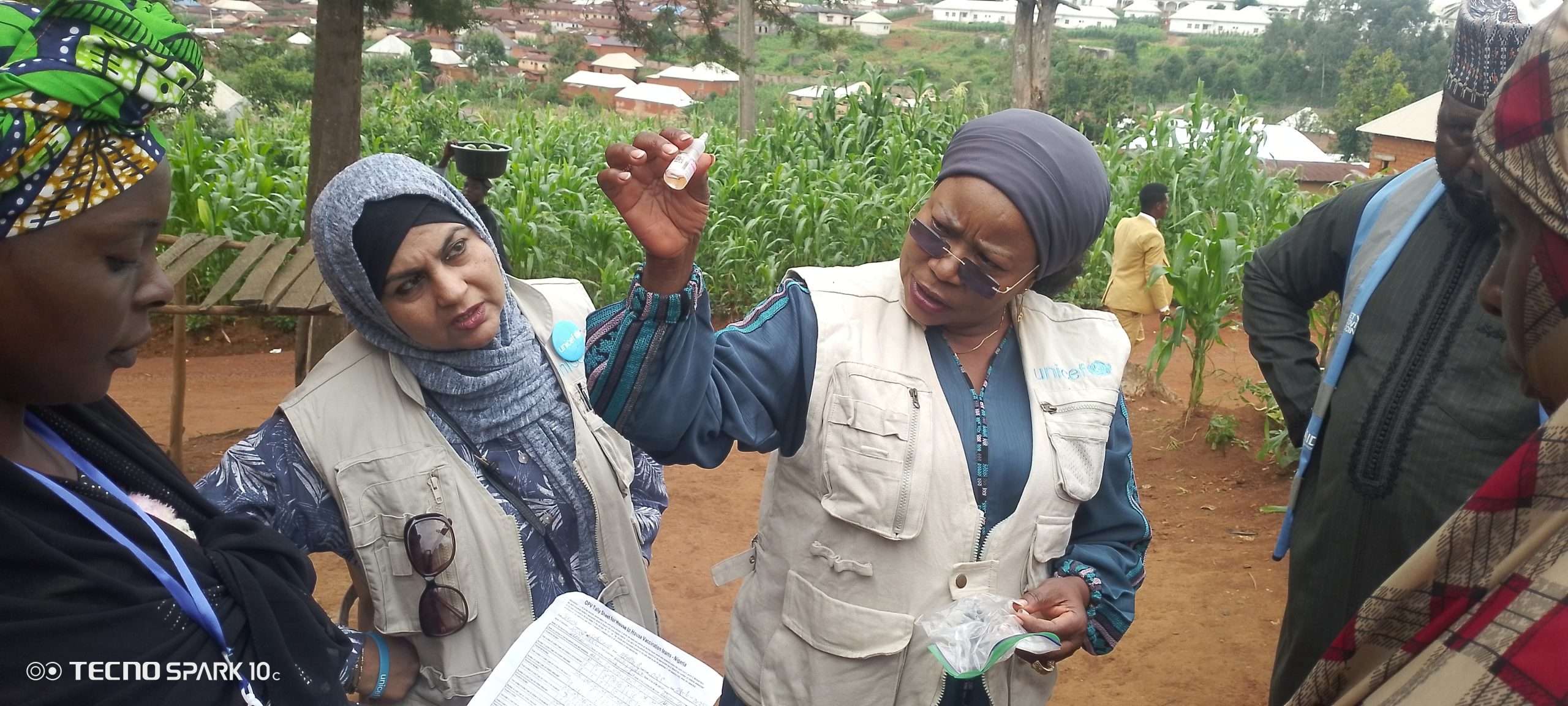
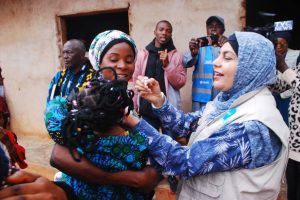
Leading the charge is Dr. Nuzhat Rafique, the spirited Chief of UNICEF’s Bauchi Field Office. Rather than watch from afar, she’s laced up her boots and joined the journey, trekking through steep hills to oversee vaccination teams and at times, rolling up her own sleeves to deliver the life-saving drops.
“We’ve been able to visit Ward A and Ward B in Sardauna,” Dr. Rafique shared with The Guardian, a note of satisfaction in her voice. “We checked the households, markets, churches, Islamic schools, and even vaccinated children in the streets. The exercise is going well. The teams are very committed.”
Yet, for all the progress, challenges persist. Cultural and religious beliefs continue to sow seeds of doubt, leading some families to refuse vaccination for their children. It’s an obstacle Dr. Rafique refuses to shy away from.
“Non-compliance is common in the northeast,” she acknowledged. “Some of it comes from religious issues, others from traditional beliefs. What we’ve done is incorporate those concerns into our communication materials so they can be addressed through media, social mobilisation, and community-based approaches.”
She hasn’t confined her work to meetings or reports. Instead, she has personally visited families resistant to vaccination, listening to their fears and gently offering reassurance.
“I went to non-compliant households myself. I wanted to hear their concerns so we could resolve them,” she explained. “Next time, there will be no issues of non-compliance. I also explained to the Hausa community that in Islam, it’s highly valued to protect children’s health.”
Her commitment has not gone unnoticed. Fredrick Nyanganji, Director of Primary Health Care in Sardauna council, has stood shoulder to shoulder with the teams in the field.
“We all went round to supervise the teams,” he said. “The house-to-house teams, special teams, and focal persons in the various wards have done well. We’re not disappointed because there have been no significant lapses or gaps.”
Health workers and supervisors working in Sardauna’s most inaccessible corners echo similar pride and relief. Many attribute the campaign’s success to the close partnership among UNICEF, the Taraba State Primary Health Care Agency, and other development partners, who have pooled their resources and expertise.
Challenges remain. Data collection, such as ensuring every marked household is accurately logged, and improving training for health workers, are areas needing attention. But spirits, as I served by The Guardian, are high, fueled by the visible impact of their work.
As vaccination teams continue to wind through forest trails and scramble up rocky slopes, every drop of polio vaccine delivered carries a message more powerful than any words: that even in the most hidden corners of Taraba, children deserve a future free from the threat of paralysis.
For those on the ground, each child immunised, according to experts, is not only a medical triumph, but also a promise kept and a step closer to consigning polio to the pages of history in Taraba and the country at large.
Guardian