Prof. Oyewole O. Sarumi |Ph.D., ACC., FNIM, FIIM, FCPDM
Introduction
Africa, a continent of 1.4 billion people, is at a critical juncture in its development journey. While it boasts rich natural resources, a youthful population, and growing economies, it remains heavily reliant on imported goods, particularly in the pharmaceutical sector. Over 70% of medicines consumed in Africa are imported, and the continent produces less than 2% of the global supply of active pharmaceutical ingredients (APIs)—the essential building blocks of drugs. This dependency not only undermines Africa’s health security but also represents a missed economic opportunity.
The COVID-19 pandemic exposed the vulnerabilities of Africa’s healthcare systems and highlighted the urgent need for self-reliance in pharmaceutical production. With the African Continental Free Trade Area (AfCFTA) creating a single market of $3.4 trillion, the time is ripe for Africa to arise and develop its pharmaceutical industries. By investing in research and development (R&D), local API production, and robust marketing strategies, Africa can transform its pharmaceutical sector into a powerhouse of health and economic growth. This article explores the opportunities, challenges, and actionable steps for Africa to build a self-reliant pharmaceutical industry, with lessons from Nigeria, South Africa, and Egypt.
The Current State of Africa’s Pharmaceutical Industry
Africa’s pharmaceutical market is valued at approximately $50 billion and is projected to grow to $70 billion by 2030. Despite this growth, the continent remains heavily dependent on imports for APIs and finished drugs. For instance:
– Nigeria, Africa’s largest economy, imports over 70% of its medicines.
– South Africa, the continent’s most industrialized nation, still relies on imports for 80% of its pharmaceutical needs.
– Egypt, a leader in pharmaceutical production, imports 90% of its APIs.
This dependency not only strains foreign exchange reserves but also leaves Africa vulnerable to supply chain disruptions, as seen during the COVID-19 pandemic. The lack of local API production is a significant bottleneck, as APIs account for 60-70% of the cost of drug manufacturing. Without addressing this gap, Africa’s pharmaceutical industry will remain underdeveloped.
Why Africa Must Develop Its Pharmaceutical Industry
1. Health Security and Self-Reliance
The COVID-19 pandemic underscored the dangers of over-reliance on imported medicines. When global supply chains were disrupted, African nations struggled to access essential drugs, vaccines, and medical supplies. Developing local pharmaceutical industries will enhance Africa’s health security, ensuring that the continent can meet its healthcare needs even during global crises.
2. Economic Growth and Job Creation
The pharmaceutical industry is a high-value sector with the potential to create millions of jobs and contribute significantly to GDP. By producing APIs and finished drugs locally, Africa can reduce its import bill, conserve foreign exchange, and generate revenue through exports. For example, Nigeria’s pharmaceutical industry employs over 150,000 people and contributes $2 billion annually to the economy. Scaling up production could create even more jobs and stimulate economic growth.
3. Boosting Intra-African Trade Through AfCFTA
The AfCFTA provides a unique opportunity for Africa to integrate its pharmaceutical markets and promote intra-African trade. By harmonizing regulatory standards, reducing tariffs, and improving logistics, African nations can trade medicines and APIs more efficiently. This will not only reduce dependency on imports but also position Africa as a global player in the pharmaceutical industry.
4. Addressing Africa’s Disease Burden
Africa bears 25% of the global disease burden but accounts for only 3% of global health expenditure. Diseases such as malaria, HIV/AIDS, and tuberculosis disproportionately affect the continent, while non-communicable diseases like diabetes and hypertension are on the rise. Local pharmaceutical production can ensure that affordable, high-quality medicines are available to address these health challenges.
Challenges Facing Africa’s Pharmaceutical Industry
1. Limited Research and Development (R&D)
R&D is the backbone of pharmaceutical innovation, yet Africa invests less than 1% of its GDP in research. This lack of investment stifles the development of new drugs, APIs, and manufacturing technologies.
2. Dependence on Imported APIs
Africa’s reliance on imported APIs increases production costs and limits the competitiveness of local manufacturers. Building API production facilities requires significant investment and technical expertise.
3. Weak Regulatory Frameworks
Inconsistent regulatory standards and lengthy approval processes hinder the growth of the pharmaceutical industry. Strengthening regulatory bodies and harmonizing standards across Africa is essential for ensuring the quality and safety of locally produced medicines.
4. Inadequate Infrastructure
Poor infrastructure, including unreliable power supply and inadequate transportation networks, increases production costs and limits access to markets.
5. Skills Gap
The pharmaceutical industry requires highly skilled professionals in areas such as drug formulation, quality control, and regulatory affairs. Africa’s education system must be aligned with the needs of the industry to bridge this gap.
Recommendations for Building Africa’s Pharmaceutical Industry
1. Invest in Research and Development (R&D)
R&D is critical for developing new drugs, APIs, and manufacturing processes. African governments and private sector players should:
– Establish research hubs and innovation centres focused on pharmaceuticals.
– Partner with universities and international organizations to build capacity.
– Provide grants and incentives for R&D projects.
2. Develop Local API Production
Active Pharmaceutical Ingredients (API) are the foundation of drug manufacturing. Africa must invest in API production facilities to reduce dependency on imports. Key steps include:
– Building API parks with state-of-the-art infrastructure.
– Providing tax incentives and subsidies for API manufacturers.
– Encouraging public-private partnerships to share risks and resources.
– Governments within each of the Economic Communities form collective collaboration among top pharmaceutical researchers and allied medical professionals.
3. Strengthening Regulatory Frameworks
Robust regulatory systems are essential for ensuring the quality and safety of medicines. African nations should:
– Harmonize regulatory standards under the AfCFTA.
– Streamline approval processes for new drugs and APIs.
– Build the capacity of regulatory bodies through training and technology.
4. Improve Infrastructure
Reliable infrastructure is critical for the pharmaceutical industry. Governments should:
– Invest in renewable energy to ensure a stable power supply.
– Upgrade transportation networks to facilitate the movement of goods.
– Develop industrial parks with specialized facilities for pharmaceutical manufacturing.
5. Build Human Capacity
A skilled workforce is essential for the growth of the pharmaceutical industry. Africa should:
– Introduce pharmaceutical sciences programs in universities and vocational schools.
– Provide scholarships and training opportunities for students and professionals.
– Encourage diaspora professionals to return and contribute their expertise.
6. Leverage the AfCFTA
The AfCFTA provides a platform for integrating Africa’s pharmaceutical markets. Key actions include:
– Reducing tariffs on pharmaceutical products and raw materials.
– Harmonizing intellectual property laws to encourage innovation.
– Promoting regional value chains for APIs and finished drugs.
7. Promote Public-Private Partnerships
Collaboration between governments, private sector players, and international organizations is essential for building a robust pharmaceutical industry. Examples include:
– Joint ventures between local and international pharmaceutical companies.
– Partnerships with organizations like the World Health Organization (WHO) and the African Union (AU).
– Investment from development finance institutions such as the African Development Bank (AfDB).
Case Studies: Lessons from Nigeria, South Africa, and Egypt
Nigeria
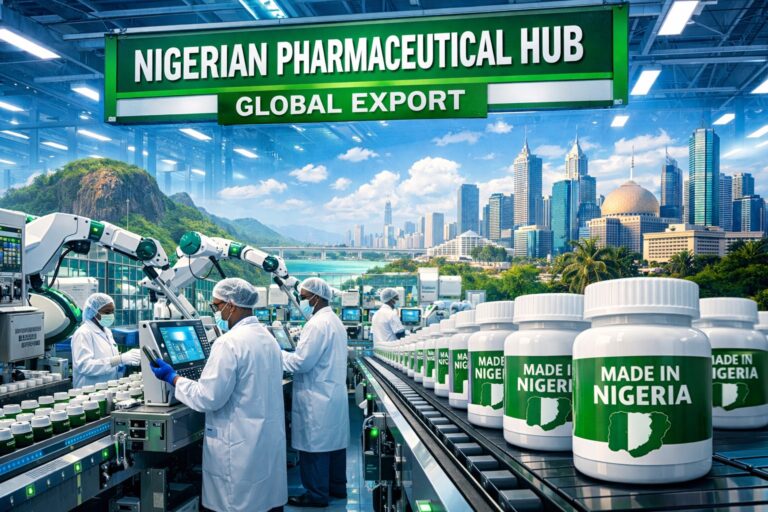
Nigeria’s pharmaceutical industry is one of the largest in Africa, with over 120 local manufacturers. However, the sector remains heavily reliant on imported APIs. To address this, the Nigerian government has launched initiatives such as the National Institute for Pharmaceutical Research and Development (NIPRD) and the Nigerian Pharmaceutical Manufacturing Plan (NPMP). These programs aim to boost local API production and reduce dependency on imports.
South Africa
South Africa is a leader in pharmaceutical production, with companies like Aspen Pharmacare producing antiretroviral drugs for HIV/AIDS. However, the country still imports 80% of its pharmaceutical needs. To strengthen the sector, South Africa has invested in R&D and established the Biovac Institute, a public-private partnership focused on vaccine production.
Egypt
Egypt is a pioneer in pharmaceutical production, with over 200 local manufacturers. The country produces 90% of its medicines but relies heavily on imported APIs. To address this, Egypt has launched the Egyptian Drug Authority (EDA) and invested in API production facilities.
Conclusion
Africa’s pharmaceutical industry holds the key to the continent’s health security and economic prosperity. By investing in R&D, local API production, and robust regulatory frameworks, Africa can reduce its dependency on imports and build a self-reliant pharmaceutical sector. The AfCFTA provides a unique opportunity to integrate Africa’s pharmaceutical markets and promote intra-African trade.
The time for Africa to arise and develop its pharmaceutical industries is now. Governments, private sector players, and international partners must work together to create an enabling environment for growth. By doing so, Africa can ensure that its people have access to affordable, high-quality medicines while creating jobs, boosting economic growth, and positioning itself as a global leader in the pharmaceutical industry.
The future of Africa’s health and prosperity lies in its ability to take control of its pharmaceutical destiny. Let us seize this opportunity and build a healthier, more prosperous continent for generations to come.
Join Our Pharmaceutical, Drugs and Health News Updates Group: https://chat.whatsapp.com/K0EecK8GeZf24d283IpAnS