Bauchi State Government has reaffirmed its commitment to providing free antenatal care and drugs for pregnant women and children under the age of five as part of an aggressive drive to improve family health and reduce maternal and infant mortality rates.
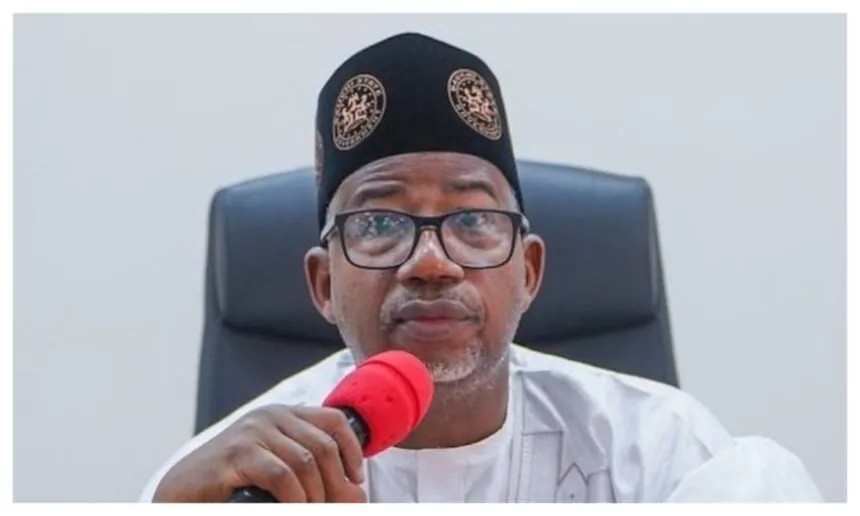
The declaration was made by the State Commissioner of Information and Communications, Usman Shehu Usman, during a media tour of ongoing and completed projects spearheaded by the administration of Governor Bala Abdulkadir Mohammed.
During visits to primary healthcare centers in Konkyel, Darazo Local Government Area, and Dagauda, Dambam Local Government Area, Commissioner Usman assured journalists that the government has made provisions for essential drugs, delivery kits, and other commodities to ensure the success of the free medical services.
“Government is committed to quality, effective and efficient service delivery in the healthcare sector… to ensure that patients have unhindered access to services,” he said.
The Commissioner urged residents to take full advantage of the available services by freely attending any health facility across the state.
On-site officials confirmed the government’s commitment. The Officer-in-Charge at the Konkyel Primary Healthcare Centre confirmed a steady supply of drugs and delivery kits. Similarly, Tafida Hussaini, the official in charge of the Model Primary Health Care in Dagauda, stated that free antenatal care and drugs for women and children are being actively provided to address maternal mortality.
“There is this programme that the government is doing in which we offer free drugs for antenatal and vaccine among others,” Tafida Hussaini said, adding that the state government has provided funds for the purchase and storage of adequate drugs at the hospital.
The Dagauda facility, which has been upgraded and expanded from a 30-bed to a 49-bed capacity, has also been equipped with a 24-hour solar power system. “We have enough water, there is solar, 24 hours, we don’t even use NEPA,” Hussaini noted, highlighting the facility’s self-sufficiency.
Security for the healthcare center has also been enhanced, with the African Development Bank providing seven security personnel in addition to those supplied by the local government authority.
Despite the significant improvements, a key challenge remains. According to Tafida Hussaini, the expanded facility has seen a sharp increase in patient patronage, including from neighboring states, leading to a shortage of staff.
“Additional manpower is needed to take care of the increasing level of patronage,” he said, calling for more personnel to ensure the hospital’s effective management.