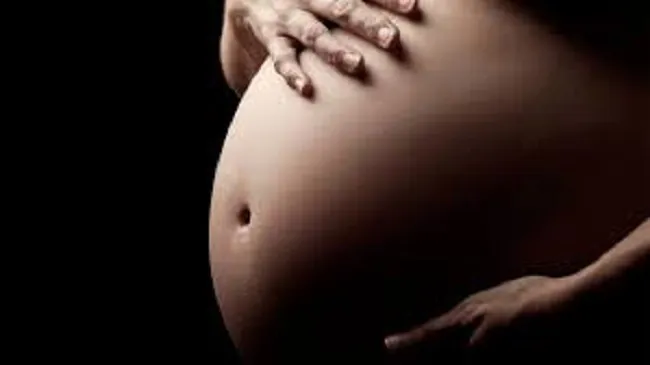
Iron deficiency is ‘very common’ among healthy, low-risk pregnant women, with a notably higher prevalence on the African continent. When a woman becomes pregnant, her iron requirements increase almost tenfold to support foetal development as well as her own increased iron needs.
Iron deficiency can lead to anaemia, a condition in which the body can’t produce sufficient haemoglobin, which, in turn, limits the red blood cells’ ability to carry oxygenated blood throughout the body.
Anaemia is an indicator of both poor nutrition and poor health. Its occurrence during pregnancy can have lasting health consequences for both the mother and her baby. It may result in women’s impaired health and quality of life and consequential impairment in newborns and child’s development and learning.
At the moment, screening for iron deficiency during pregnancy is not routinely done, regardless of the presence or absence of anaemia. Even when screening is conducted, haemoglobin is frequently used to evaluate iron status among pregnant women. Haemoglobin, however, only indicates anaemia.


As a result, poor maternal and infant health outcomes that may develop before iron deficiency advances to anaemia may arise undetected.
“Anaemia is a condition that a lot of people don’t usually pay significant attention to; it is taken as, ‘Oh, it’s common for a woman to be anaemic,’” said Professor BosedeAfolabi, the director for the Centre for Clinical Trials, Research and Implementation Science at the College of Medicine at the University of Lagos.
Even in Nigeria, she added, “the level at which we cut off anaemia in pregnant women and non-pregnant women is much lower than it should be, than what the WHO recommends.”
Afolabi, a consultant obstetrician and gynaecologist, spoke at the 8th international and scientific conference of the Association of Fetomaternal Medicine Specialists of Nigeria (AFEMSON) with the theme ‘Contemporary Research in Fetomaternal Medicine’.
Anaemia in women is important. It leads to so many significant health issues, including infections, bleeding, depression, fatigue, and death. Mothers die when they are anaemic. The consequences of anaemia are many.
Unfortunately, anaemia is the endpoint of iron deficiency. So, a complete blood count, a simple test, can count the number of blood cells in a sample of blood. It is unlike the Packed Cell Volume, also known as haematocrit, which only measures the proportion of red blood cells in the blood sample.
Ian Roberts, a professor of obstetrics and gynaecology, said, “As you get more iron deficient, it affects you in several ways, but it eventually causes anaemia. So, the level of haemoglobin is the last to go down.”
Professor Roberts declared that iron deficiency that doesn’t cause anaemia does cause problems, too.
“From studies, when they treat girls and young women who are iron deficient but are not anaemic, their school performance improves. Their academic grades go up, they find it easier to concentrate, and they have more energy. So, iron deficiency before anaemia does have an effect,” he added.
The PCV test helps to assess the blood’s oxygen-carrying capacity, but its values can vary due to conditions like dehydration and polycythaemia, a condition where the body produces too many red blood cells.
He, however, declared the need to prevent and treat anaemia in pregnancy.
According to Professor Roberts, “Actually, we’ve got to stop women being anaemic even before they get pregnant. If you get pregnant with anaemia, a whole lot of different things happen – preterm birth, low birth weight, and increased risk of bleeding after delivery.
“Now, heavy menstrual bleeding is a significant cause of anaemia in young women. It’s an important cause of anaemia in young women. If we can identify young women with anaemia and give them iron and folate, but also give them tranexamic acid while they are menstruating, so tackle heavy menstrual bleeding.”
Professor HleemaShahur-Still, in her presentation on the WOMAN trial, said that if bleeding can be prevented by giving tranexamic acid, then it is possible to prevent anaemia.
According to her, “Also, tranexamic acid will reduce the loss of about 40-50 per cent of menstrual blood from each cycle, leading to about an 8-mil reduction per cycle. And it can improve health-related quality of life and participation in women with high and heavy menstrual bleeding.”
Professor Shahur-Still declared that from the WOMAN trial, if tranexamic acid is given immediately after the onset of bleeding in women giving birth, it can also reduce the risk of women bleeding to death by about 70 per cent.
She added: “From modelling, it showed that if we give tranexamic acid to all women giving birth, we reduce maternal mortality in countries where the risk of PPH is equal to or greater than five deaths per 100,000 births. And it’s cost-effective where the risk of PPH is greater than or equal to 21 deaths per 100,000.”
Prof HadijatRaji, consultant obstetrician and gynaecologist at the University of Ilorin Teaching Hospital, said monitoring women’s blood levels to be sure there is no iron deficiency or anaemia is vital throughout pregnancy because up to 50 per cent of pregnant women live with some level of anaemia.
She added, “It’s important for our women to know that having a safe delivery is not the end of it. We need to ensure that we’re also safe throughout the postpartum period to ensure that we can keep ourselves healthy and keep our newborn and our families healthy as well.”